Home / Flooded basement cleanup
Flooded basement cleanup in Detroit, MI
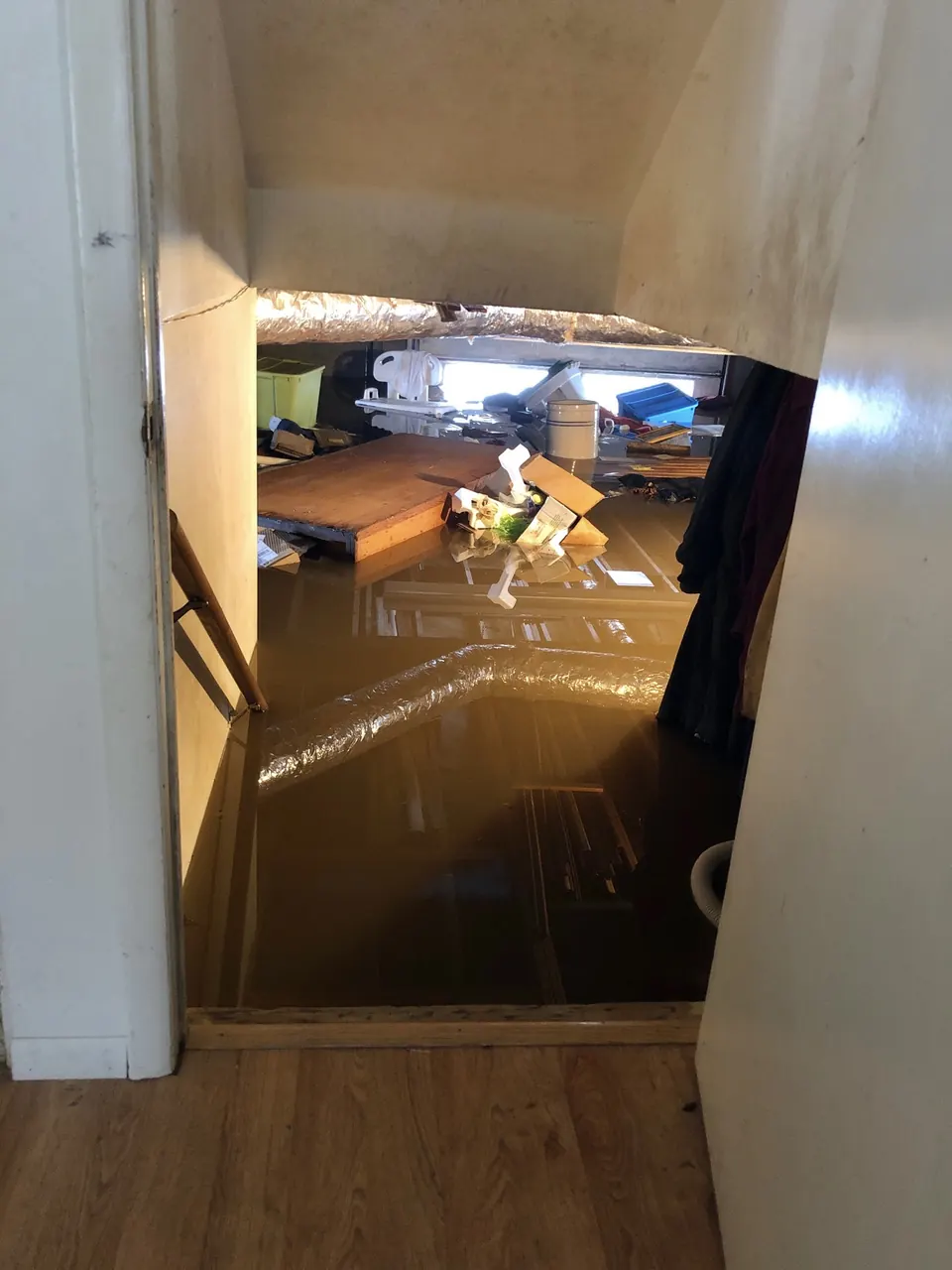
Water in the basement after a storm, a burst pipe or a backed-up drain. Call, say how deep it is and where it came in, and a Detroit-area crew comes to pump it out and dry what's left.
Call the line
(313) 788-9835You'll talk to a Detroit-area restoration company. Say where the water is coming from.
Right now
Before anyone goes down the stairs
The City of Detroit's flood guidance, in order.
- Stay out of the water if the fuse box, outlets, appliances or wires are down there. DWSD says not to walk in it.
- Don't step in until the power to the basement is off. If you can't reach the panel safely, call DTE at 800-477-4747.
- Photograph the water line on the walls and everything it touched. Keep every receipt from here on.
- If it came up a floor drain, report it to DWSD at 313-267-8000 and ask for a service request number.
Why Detroit basements take on water
Most Detroit houses send rain and sewage into the same city pipes. When a storm fills them, water comes back through the lowest fixture in the house: the floor drain, the shower drain, the laundry tub or a basement toilet. That's why a flooded basement here is often a sewer backup and needs to be cleaned as sewage, not just dried.
Water also gets in from above ground: downspouts that dump next to the foundation, a split supply line, or a water heater or washer that lets go. The source decides the cleanup, so it's the first thing the crew will ask.
What has to come out
The City's cleanup advice is blunt: when in doubt, throw it out. Drywall and insulation that got wet with sewage or floodwater come out and get replaced. So does anything that can't be cleaned and dried.
- Carpet and pad that sat in dirty water, and ceiling tiles that got wet.
- Cardboard boxes, paper and anything soft that wicked water up.
- Food that touched the water, sealed or not, per CDC.
Clean water from a pipe is different. If it's caught fast, carpet and the bottom of the walls can often be dried in place. The extraction and drying page explains what EPA says can be saved.
The damage you can't see yet
The City of Detroit's 2022 Basement Backup and Flooding Handbook lists what a basement flood hits besides the floor: the furnace, the hot water tank, the washer and dryer, and the house's electrical system. Have an electrician check the wiring before the power goes back on; CDC gives the same advice.
Anything left wet past two days is where mold starts. EPA says materials dried within 24 to 48 hours usually don't grow mold, which is why the crew sets fans and dehumidifiers the same day.
Keeping the next one out
DWSD's own tips: move downspouts so they drain onto the lawn at least three feet from the house, keep basement drains clear, and have the sewer line snaked at least once a year. Detroit homes that disconnect their downspouts get a 25% credit on the DWSD drainage charge.
A backwater valve closes your sewer line with a flap during heavy rain. While it's closed, don't run toilets or drains. The City's Basement Backup Protection Program has helped pay for valves and sump pumps in some neighborhoods.
Related
Questions people ask
Is a flooded basement the city's fault?
Sometimes. If sewage came up the drain, report it to DWSD and file a claim within 45 days. The City's handbook says claims are likely denied when the sewer was just overwhelmed by rain and no system failure caused at least half the problem. The DWSD claim guide walks through it.
Will my homeowners insurance pay?
Often not. The City's handbook says most basement flood damage isn't covered unless you carry flood insurance and a sewage backup rider. Read the insurance guide before you call your agent.
Can I just use a shop vac?
For an inch of clean water, a wet vacuum is a start. For sewage or deeper water, EPA says wear an N-95, goggles and gloves, and the cleanup needs a professional.